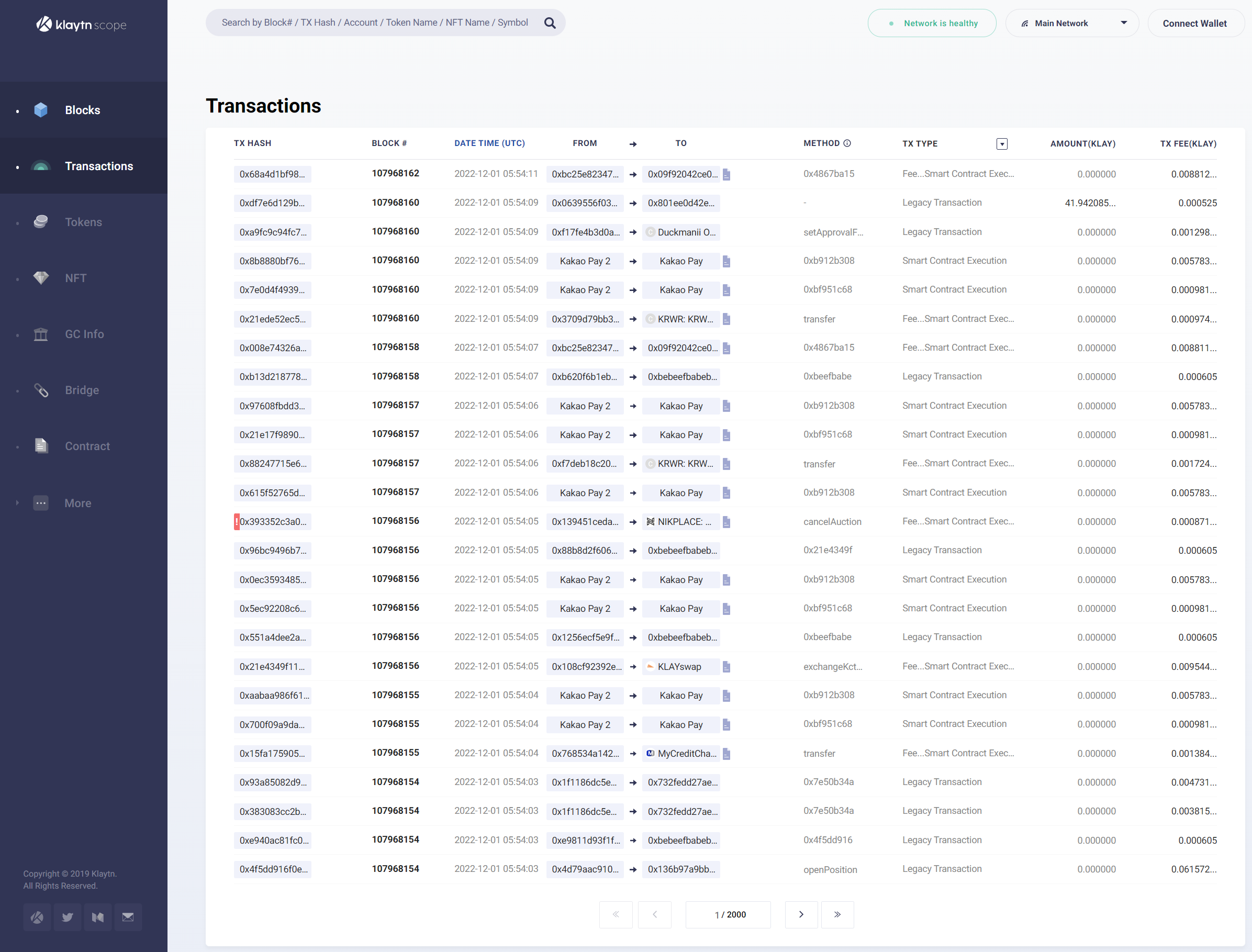
# Transactions
It displays a list of the most recent transactions from top to bottom. Refresh the page for an updated list.
#### TX HASH
Unique identifier of transactions.
To see details, click on the hash.
A red exclamation mark appears next to “TX HASH” if the transaction fails.
#### BLOCK
This is the number of the block in which the transaction was executed.
You can view block details by clicking on the block number.
#### **DATE TIME (LOCAL/UTC) / AGE**
Pressing the “Date Time” tab will change the displayed time.
* DATE TIME: Displays when the transaction was executed in local time or UTC.
* AGE: Time since the transaction was executed.
#### **FROM -> TO**
"FROM" is the sender address of the transaction, and "TO" is the recipient address of the transaction. If it is a contract, it is named, and a file icon is displayed next to the address. Clicking on the address will redirect you to the account or contract details.
#### **METHOD/METHODSIG**
This is the function identified in the input data of a transaction. The method name is displayed if it is a recognizable or well-known function. In the case of unidentified functions, the method signature is displayed.
#### **TX TYPE**
The type of transaction. You can view filtered transactions of a specific type using the “TX TYPE” tab.
#### **AMOUNT (KLAY)**
The amount of funds transferred through the transaction.
#### **TX FEE (KLAY)**
The actual fee incurred for executing the transaction.
---
# Agent Instructions: Querying This Documentation
If you need additional information that is not directly available in this page, you can query the documentation dynamically by asking a question.
Perform an HTTP GET request on the current page URL with the `ask` query parameter:
```
GET https://docs.kaiascope.com/transactions.md?ask=
```
The question should be specific, self-contained, and written in natural language.
The response will contain a direct answer to the question and relevant excerpts and sources from the documentation.
Use this mechanism when the answer is not explicitly present in the current page, you need clarification or additional context, or you want to retrieve related documentation sections.